“We are not reading books merely to check off a list or to be able to say we have read them. We are reading to grow as persons, to know more that we may understand more, and ultimately, it is to be hoped, to act according to our greater wisdom.”
Karen Glass
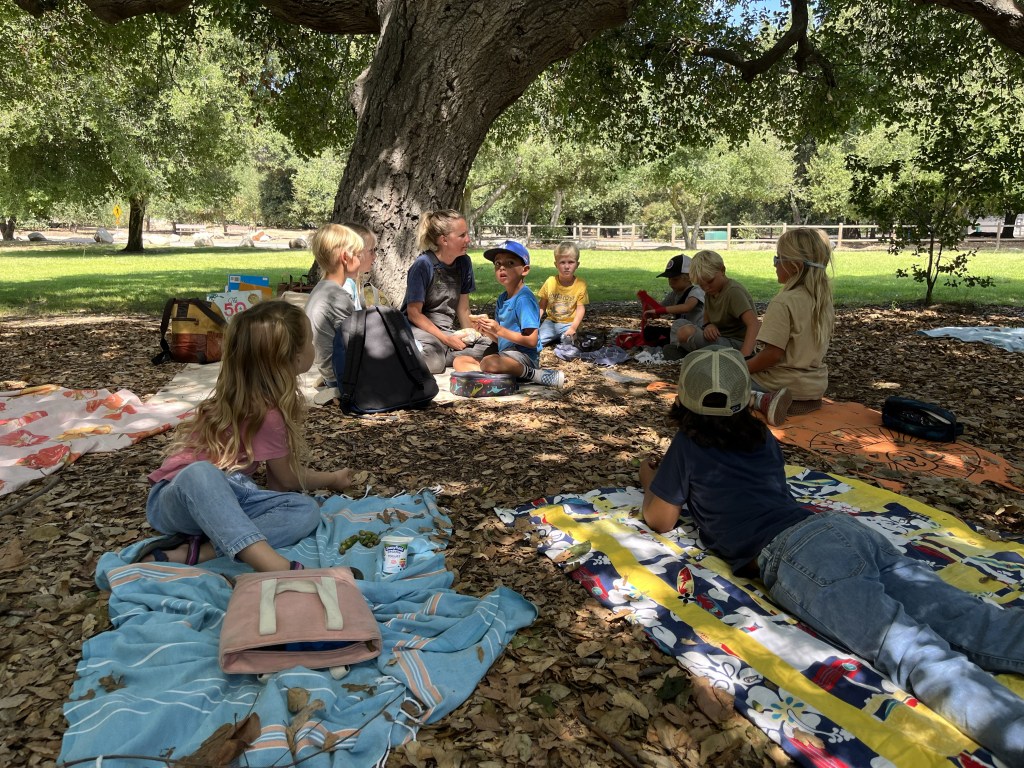
Our lessons begin at 10:15 with a poem from “Now We Are Six” or one selected from “A Child’s Book of Poems.” We then begin conversation about what we had read the previous day and what we will read today. “Before the reading for the day begins, the teacher should talk a little (and get the children to talk) about the last lesson, with a few words about what is to be read, in order that the children may be animated by expectation; but she should beware of explanation, and, especially, of forestalling the narrative” Charlotte Mason, Home Education (Vol. 1, pp. 232, 233).
Our first reading comes from “An Island Story.” An Island Story takes us through the earliest days of Britain which heavily involves the battles and heroes of the Roman Empire. We look at the world map, narrate what was heard, and then move onto our “copy work.”
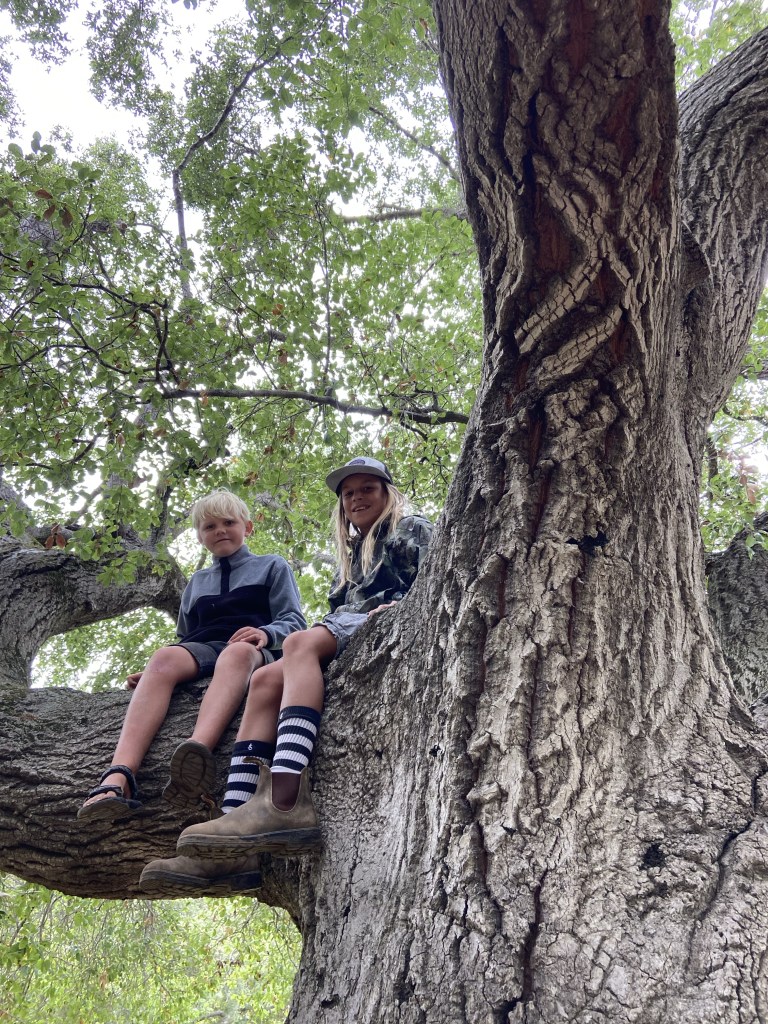
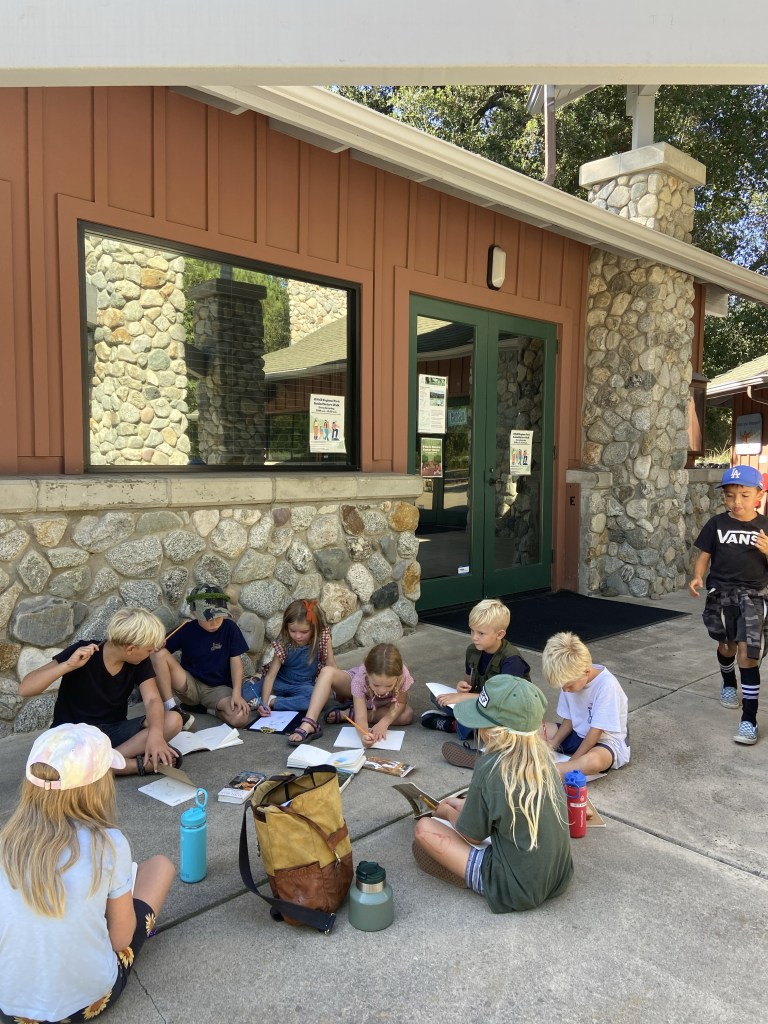
The practice of copy work begins the habit of note booking in the life of a young student. A practice that lifelong learners keep by taking notes on favorite quotes, times in history to remember, or Nature observations. The first copy work of the day is taken from a quote from “An Island Story.” Through copying down the sentence or two, the young children are learning grammar and spelling as I point out what is capitalized, where the punctuation goes, and sounding out words as they copy them down. A picture is drawn below the copy work to further solidify the story in their minds, helping them to recall the story that the quote is taken from. Drawing improves cognitive function and places a visual memory in their mind. As children finish their note booking entries they are free to get up and climb our large oak tree.
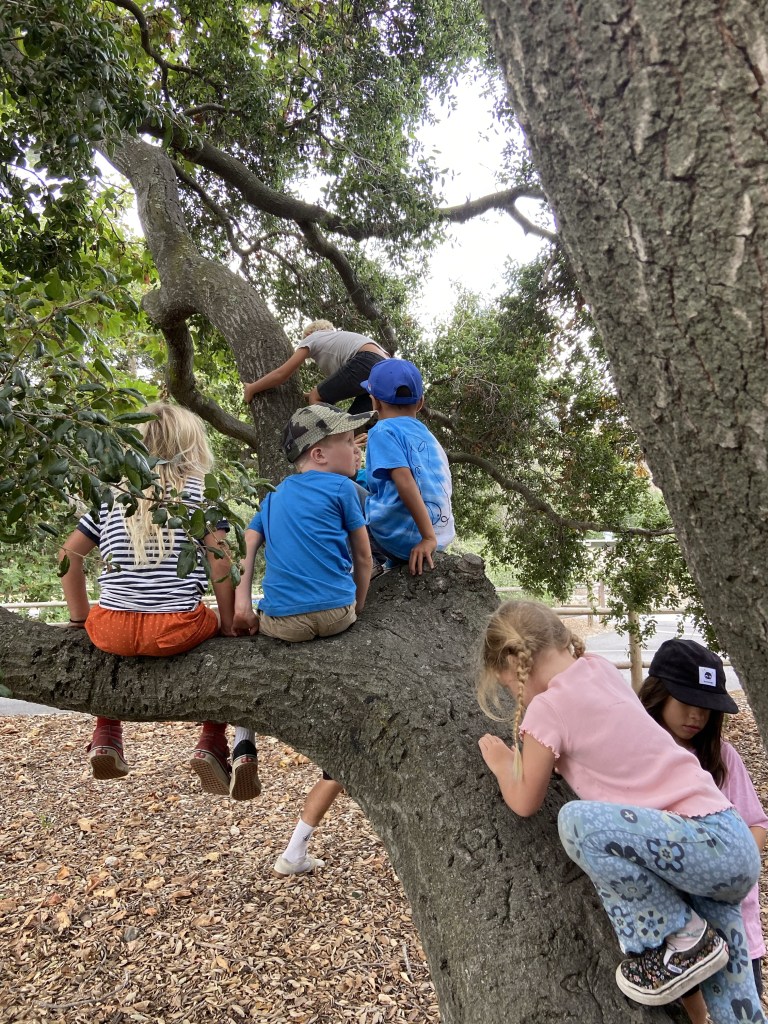
After a few minutes to climb the tree, the children are called back to their mats for another reading. The second book of the day is on rotation between Paddle-to-the-Sea, Viking Tales, and Fifty Famous Stories. We often walk to a new location before we begin reading, imagining we are taking the Dragon, the Viking’s ship we have been reading about, or the canoe from Paddle-to-the-Sea, to a far off land.

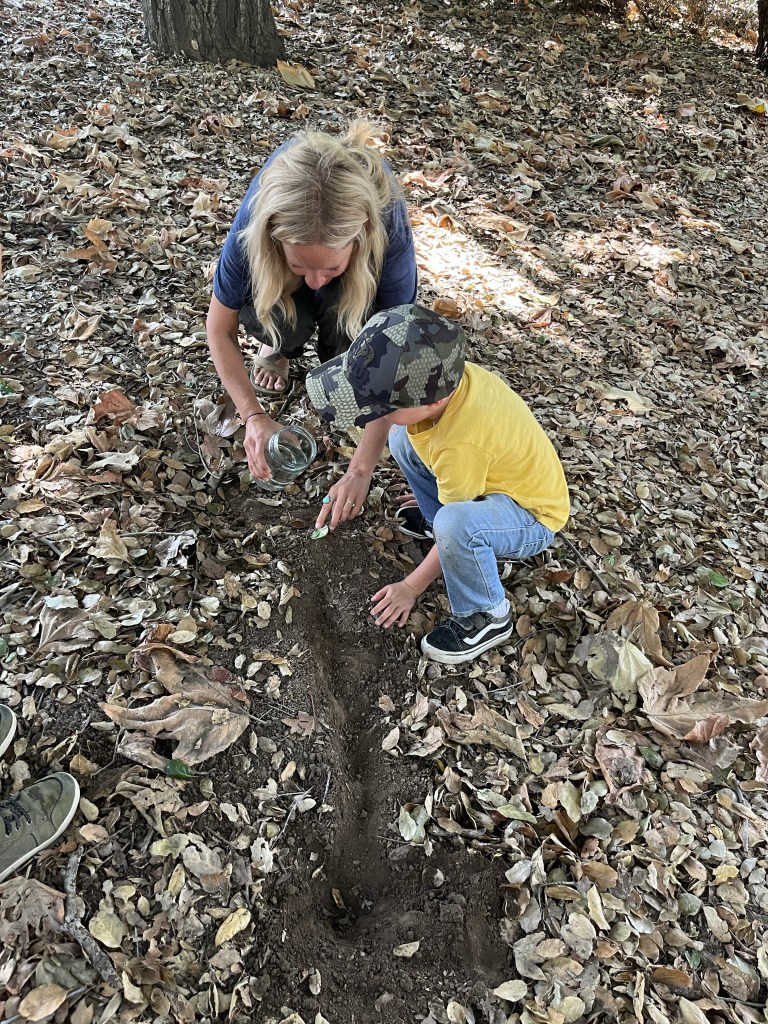
We practice narrations after reading together.
“Narration is foundational to “the act of knowing.” This is the student’s self education. During a narration, students take what was read to them or what they read themselves and “own it.” After thinking and chewing on the material, they “digest” it by retelling it in their own words.” Julie Ross
At the young ages of 5 and 6, children are narrating paragraphs. At 7 and 8, entire stories are being retold and known from beginning to end. These stories of history and literature are then becoming part of their own story. Retelling the stories helps them to own the knowledge for themselves.
Latin lessons are being introduced slowly and are becoming applicable through our reading of Viking Tales where we learn of tales of sailers and farmers. In Latin the children declare if they are a sailor or a farmer in the story by declaring, “Sum nauta!” Or “Sum agricola!” Most say they’d like to be both, “Sum nauta et agricola!” Through latin we are also learning the history of our language as well as all of the romantic languages. We talk about where and how we use nauta and Agricola in our present language (ie nautical, agricultural etc.). Considering the romantic languages also have many latin root words, learning various languages will eventually come smoothly.
We are learning geographical concepts as we read stories from all over the world. Students are learning north, south, east, and west and labeling the North and South Pole, and the equator on the globe. We are learning to recognize the climate of a certain region based on how far or near they are to the equator.
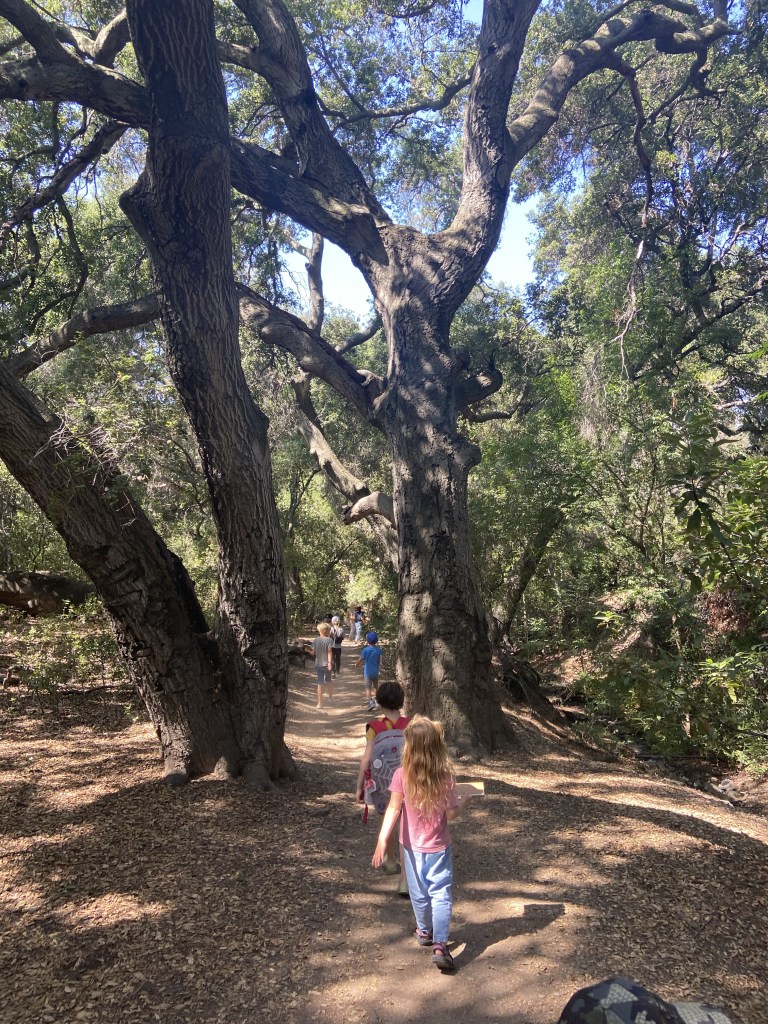
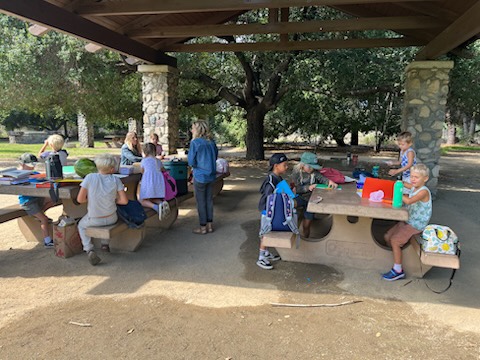
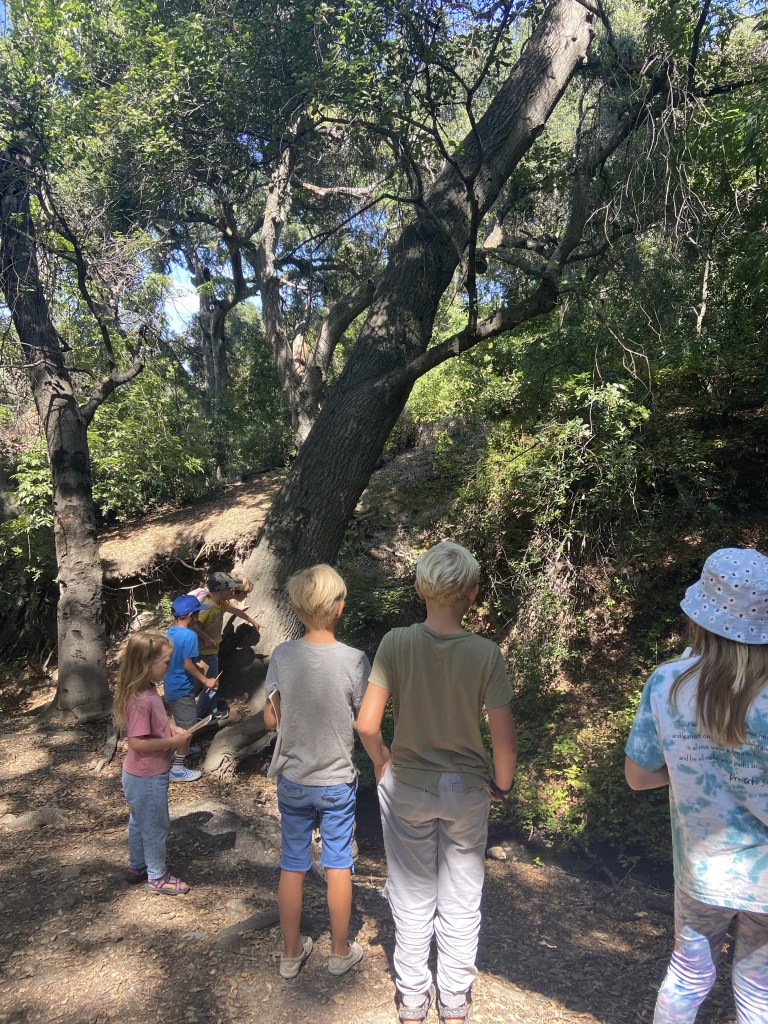
After our second reading and narrations, we enjoy lunch together. After lunch on Tuesdays we hike, read Burgess Bird Book, and take records of the weather, plants, and animals in our nature journals.
The children often have their nature handbooks with them so that they can reference different animals and read more about them.

“Keeping an illustrated, observational journal is a centuries-old method that has been reenvisioned and refined through the lens of our understanding of neuroscience, learning, and deliberate practice. A nature journal is a lens that focuses our attention and crystalizes our observations, thoughts, and experiences.” John Muir Laws, Nature Stewardship through Science, Education, and Art.

During the last hour of the day on Thursdays, our nature study portion is replaced by a drawing lesson.
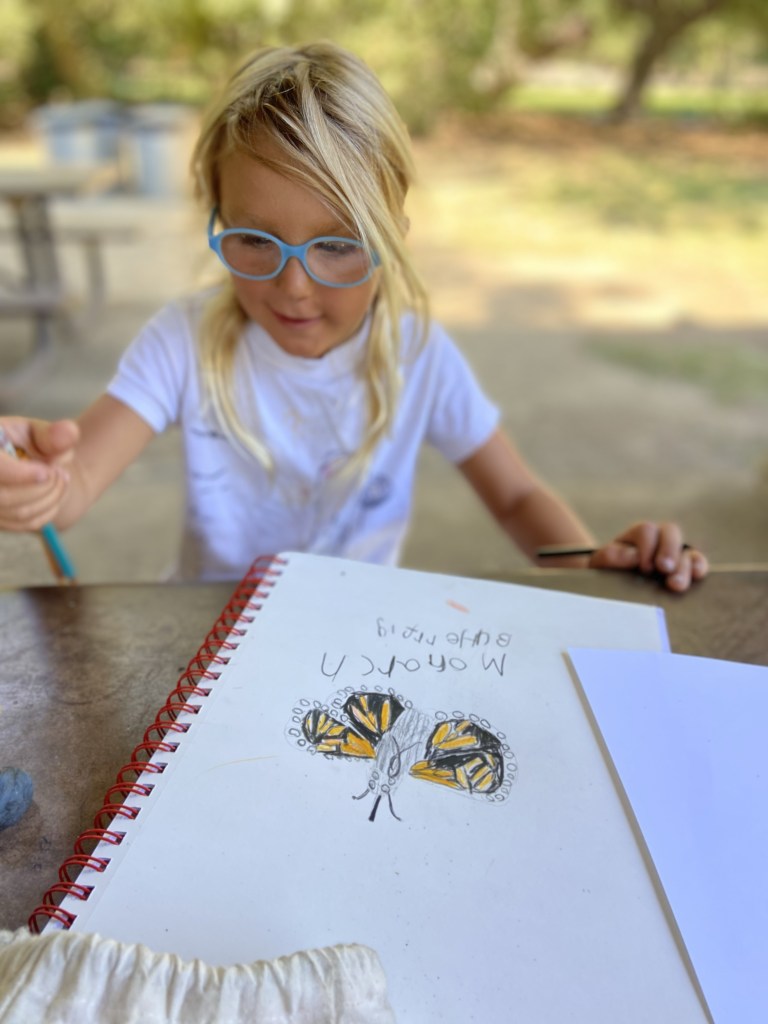
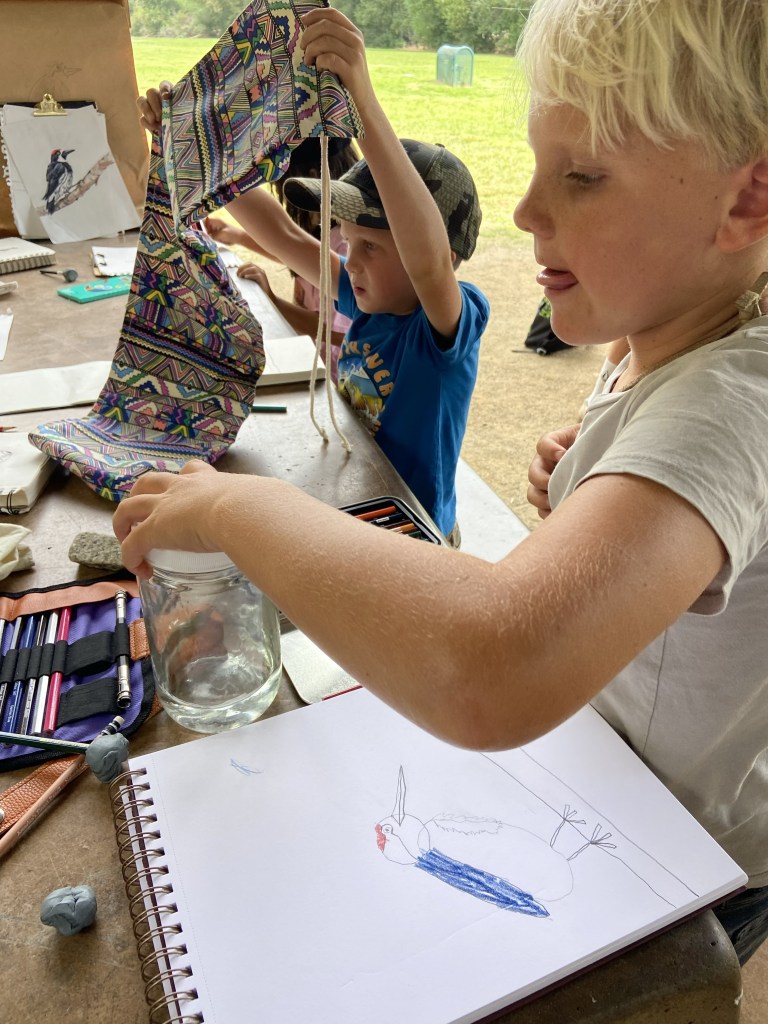
Drawing lessons are inspired by the world around us with guided lessons by Brittany Riedel on animals and bugs that they can directly observe. Since September, the children have learned to draw monarch butterflies, toads, acorn woodpeckers, and beetles. By drawing they are learning detailed information about these living things. You can imagine the unmatched excitement when on one of our hikes we came by a tree filled with noisy acorn woodpeckers after drawing them the week before!
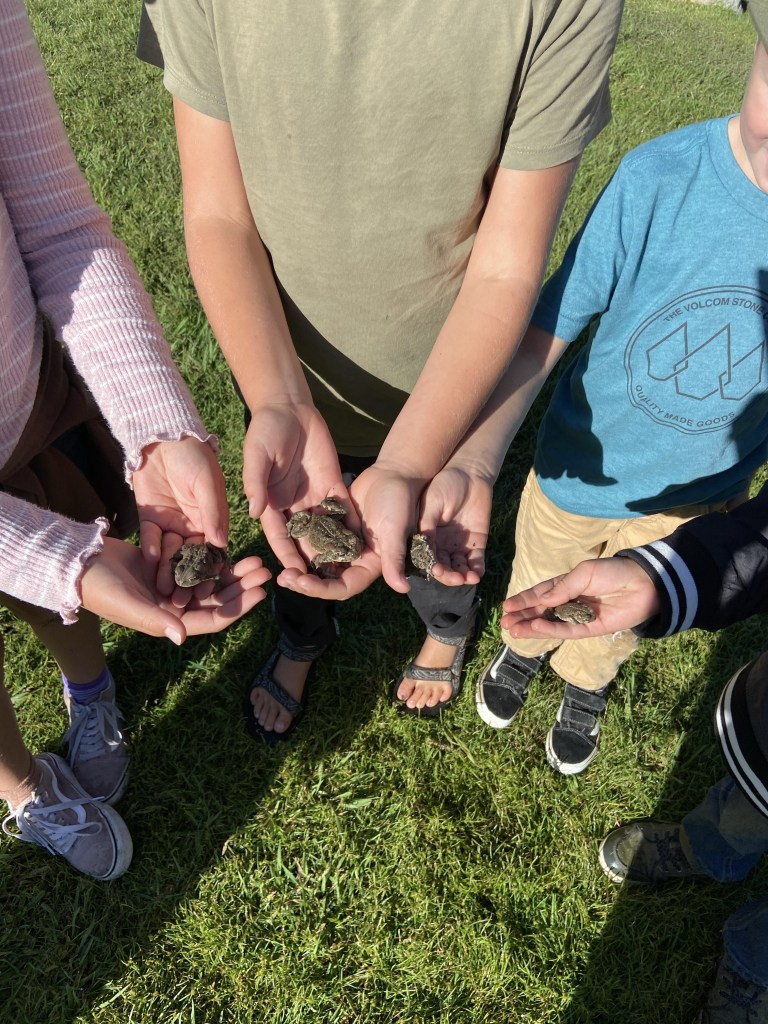
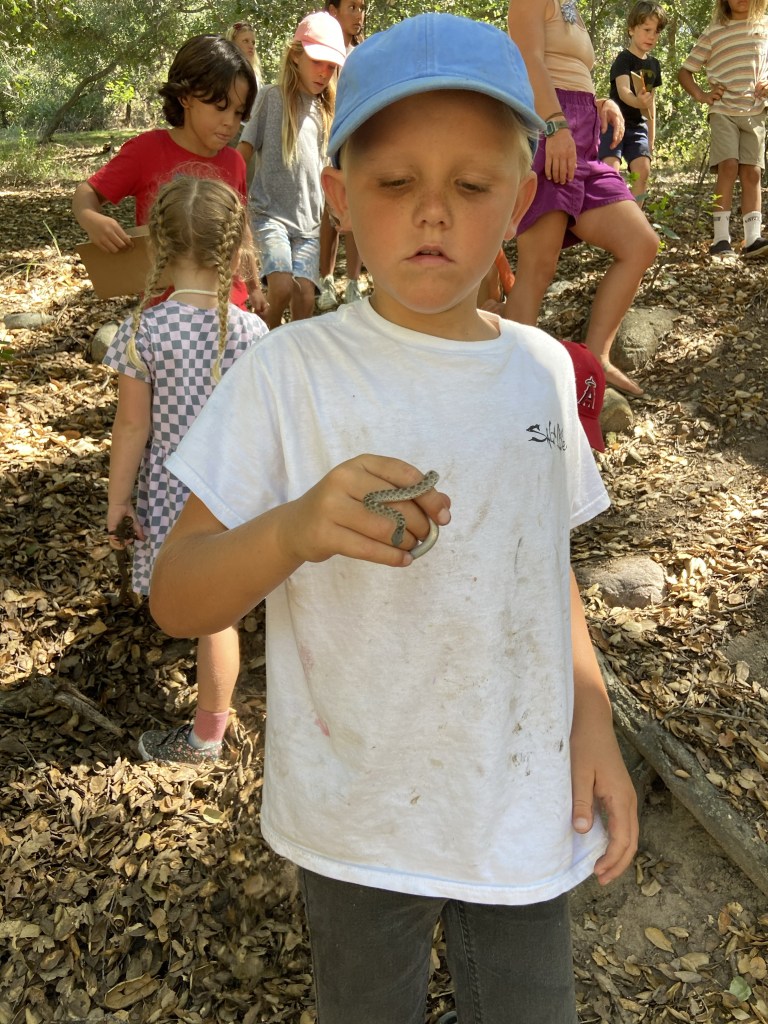
Our day ends, on Tuesdays and Thursdays, with a closing meeting that includes Form 2. We read a poem together and talk about the happenings of our day. More often than not there is someone eager to share about the deer they have seen (I always wish I could take a good photo of the deer!) or the frogs that they have held. Experiences that cannot be had anywhere else than an education outside in nature.

“We do not list “humility” among our school subjects or put it on a transcript, but that is actually the little secret of classical education. The things that make it truly classical, truly worthwhile to pursue, aren’t school subjects at all, but principles that add depth and cohesion to everything we study in all areas of the curriculum.”
Karen Glass, Consider This: Charlotte Mason and the Classical Tradition
 Live Oak Education
Leave a comment